
The faceless YouTube channel ideas that work in 2026 are the ones where every video can have its own story or answer: history explained, true crime and heists, how things were built, "What if" questions, POV roles, money stories, kids bedtime stories, talking-character comedy, mythology, horror, science and sports history. The ones to avoid are the ones that look mass-produced, because YouTube does not pay for those. With ClipFlux, each idea below is one sentence away from a finished video: pick a look, type the topic, and it writes the script, draws every scene with the same characters, and adds narration, music and captions, as a 9:16 Short or a 16:9 video of up to 15 minutes.
The twelve ideas at a glance
| Idea | Format | Look that fits | Example title |
|---|---|---|---|
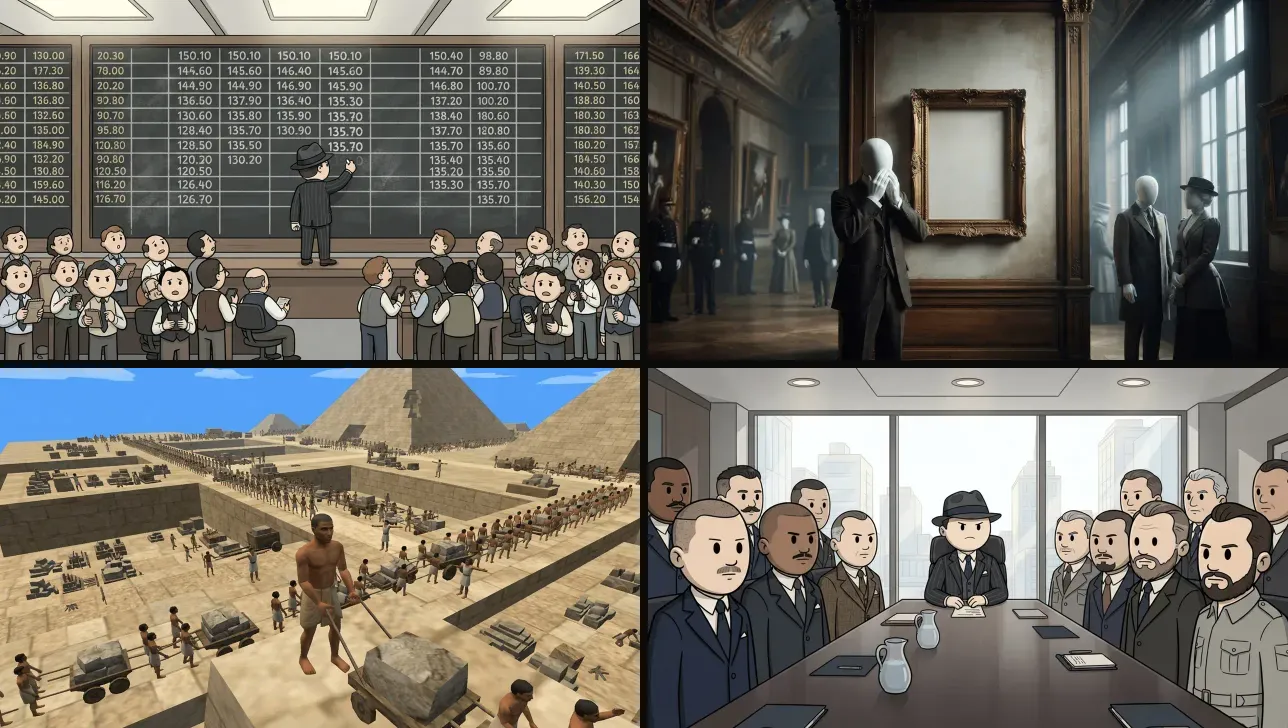
| History explained | Long | Doodle 2D | Why the 1929 crash wiped out ordinary families |
| True crime and heists | Long | Mannequin 3D | The man who stole the Mona Lisa |
| How it was built | Long or Short | PS2 Graphics, Default (cinematic 3D) | How the pyramids were actually built |
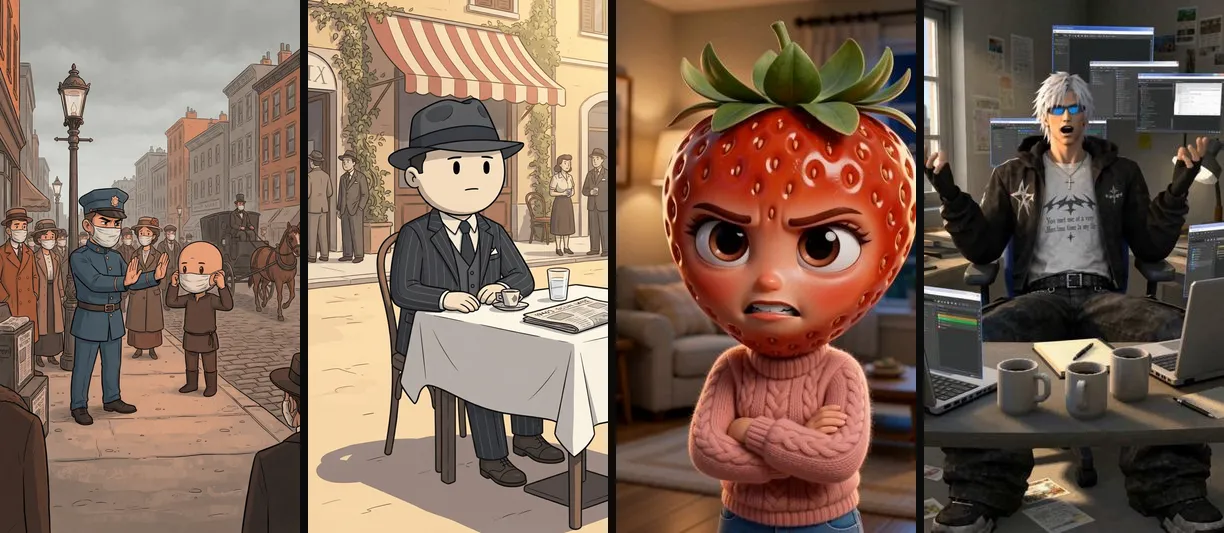
| "What if" questions | Short | Default (cinematic 3D), Doodle 2D | What if you faced the 1918 Spanish flu? |
| POV: you wake up as | Short or long | Doodle 2D | What if you were a made man in 1940s Italy? |
| Money stories | Long | Doodle 2D | POV: you wake up as the first trillionaire |
| Kids bedtime stories | Long | Storybook 3D | The little owl who was afraid of the dark |
| Talking-character comedy | Short | Fruit Drama, PS2 Graphics (Talking) | You told me you were working late |
| Mythology and legends | Long | Dark Fantasy | The real story of Medusa |
| Horror and mystery | Short or long | Doodle 2D, Dark Fantasy | The lighthouse keeper who stopped answering |
| Science and space | Short | Default (cinematic 3D) | Why astronauts come home taller |
| Sports history | Long | Doodle 2D | The underdog season nobody saw coming |
1. History explained
One event, told as a chain of causes: the 1929 crash, the fall of Rome, the day a currency collapsed. It is the classic faceless niche because the subject is the star and there are thousands of events to cover. A simple doodle look keeps it light enough to watch for ten minutes. How to make it: doodle explainer guide and the AI history video generator.
2. True crime and famous heists
Real cases told like a documentary: what happened, who did it, how they were caught. Faceless figures suit it, because they avoid putting a face on real people. The responsibility is the facts: these are real victims and real families, so every name, date and claim gets checked. See AI documentary videos and the Fern-style guide for the mannequin look.
3. How it was built
Pyramids, cathedrals, the Panama Canal: big engineering stories with a clear before and after. They work as long videos and cut well into Shorts. Watch the theories: our own pyramids video presented one construction theory as if scans had proven it, which they have not. Say "one theory is" when it is one. The retro game look of PS2 Graphics is an unusual fit that stands out.
4. "What if" questions
One hypothetical, followed forward in time: what if you stayed in space for a year, what if you faced the 1918 flu. The "what happens to your body" version is one of the most searched faceless formats there is. It suits Shorts, and the numbers have to be right. How to make it: "What if" videos with AI.
5. POV: you wake up as
The viewer lives a role in the second person: a made man in 1940s Italy, a soldier in the trenches, the first trillionaire. Strong rewatch value, and a role can carry a five-minute video if it has a whole life in it. How to make it: POV videos with AI.
6. Money stories
Fortunes made and lost: the richest people in history, how a bubble formed, what a trillion dollars would really do to your life. Finance topics tend to attract advertisers, which helps once the channel is monetized, but they also attract bad advice. Tell stories and explain how things work; do not tell viewers what to buy.
7. Kids bedtime stories
Gentle stories with a recurring cast of animal or child heroes and a small lesson at the end. A huge audience in many languages, and a niche with its own rules: videos for children must be marked "made for kids" on YouTube, which changes how they can earn and be found. How to make them and get that setting right: AI kids story videos.
8. Talking-character comedy
A recurring character who talks straight to camera, lip-synced: a strawberry in a relationship drama, a PS2-era game character ranting about his job. The character is the brand, so it has to be the same in every video. How to make it: AI talking character videos and fruit drama videos.
9. Mythology and legends
Greek, Norse and Egyptian myths, retold as stories rather than lists. Myths are old enough to be safe from most factual disputes, and dramatic enough to carry ten minutes. A dark painted look fits them better than a cartoon one.
10. Horror and mystery
Unexplained events, folk legends and original scary stories. Original fiction is the easier path: it cannot be wrong, and it is yours. If a story is invented, do not present it as true; if it is true, it belongs in the true crime rules above.
11. Science and space
One question per video: why the sea is salty, why astronauts come home taller, how deep the deepest hole goes. Close to "What if", but answering a real question instead of a hypothetical. Sources matter here more than anywhere: link them in the description.
12. Sports history
Record-breaking seasons, underdog runs, the stories behind famous rivalries. Huge fan bases, endless topics. Keep it about the story and the record, use an illustrated look rather than a realistic one for real athletes, and never put words in a real person's mouth.
Faceless ideas YouTube will not pay for
Some of the most promoted "faceless" ideas break the rules YouTube uses to decide who gets paid:
- Compilations and reuploads of other people's clips, which YouTube calls reused content.
- Quote and fact slideshows over stock footage, the kind of templated video YouTube calls inauthentic content.
- Text-to-speech stories over gameplay, when the story was copied from a forum and the gameplay from someone else.
- Fake celebrity news with realistic AI images of real people, which also needs YouTube's AI disclosure and can be removed as misleading.
The full rules, and how automated channels stay on the right side of them, are in our guide what is YouTube automation.
How to choose yours
- Write thirty titles. If each needs its own research, the niche can last. If they are one video with a word swapped, it cannot.
- Pick one look and one voice. A channel viewers recognise in a thumbnail beats a channel that changes style every week.
- Be honest about the fact-checking. History, science, true crime and body videos need it every time. Fiction, comedy and kids stories need much less.
- Test as Shorts, commit with long-form. Shorts show which topics people finish; long videos earn the watch hours.
A new ClipFlux account gets 60 credits, enough to test one idea as a short video, with no card. Making a video per week on a schedule is covered in our long-form faceless guide.
Questions
What is the most profitable faceless YouTube niche?
No niche guarantees income. Advertisers pay more to reach some audiences, so finance, business and education channels usually earn more per view than pure entertainment, but they are also more crowded. Pick a niche you can make thirty good, different videos about first.
Can a faceless YouTube channel be monetized?
Yes. YouTube pays faceless and AI-made channels through the Partner Program once they reach 1,000 subscribers and 4,000 public watch hours in 12 months (or 10 million Shorts views in 90 days), as long as the videos are not mass-produced or reused.
Which faceless niche is easiest to start?
"What if" Shorts and history explainers. Both have endless topics, need no recurring cast at first, and teach you pacing quickly. Start with Shorts, then turn the topics that do well into longer videos.
Do I need to show my face or use my own voice?
No. Faceless channels use visuals in place of a presenter and either a recorded voice or an AI narrator. YouTube allows both; what it checks is whether each video has its own substance.
How many faceless channel ideas should I try at once?
One. A channel grows when viewers know what the next video will be. Test ideas as Shorts on one channel if you must, then commit to the one viewers watch to the end.