
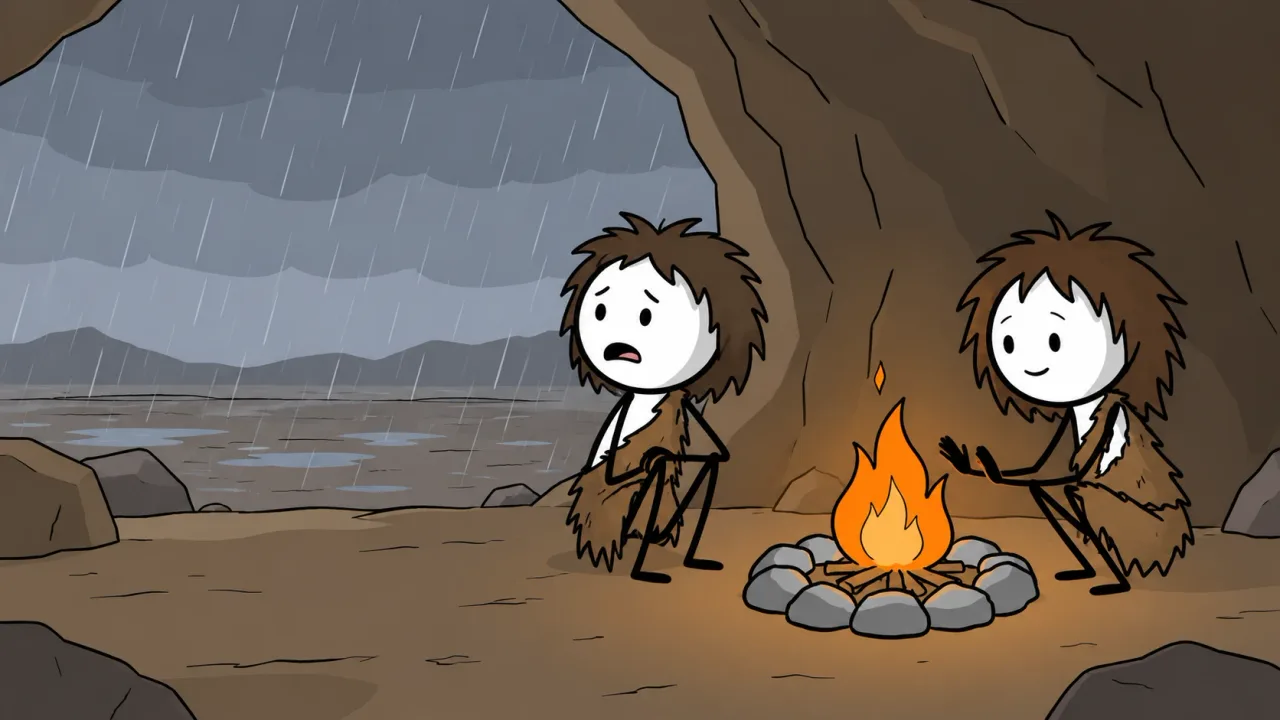
"What Did Ancient Humans Actually Do All Day?" videos are cartoon stickman history explainers: a calm narrator walks you through a day of prehistoric life, scene by scene, with round-headed stick figures in furs around a campfire. To make one, pick a question about everyday ancient life, research it, write an eight to fifteen minute script in chapters, draw every scene in one cartoon stickman style with the same characters, and add a narrator and captions. ClipFlux does the making in one go: type the question, pick the Cartoon Stickman look, and it writes the script, draws every scene with the same stick figures, voices it and adds captions, as a 16:9 YouTube video up to 15 minutes.
Why this format took off
Ink Explainer's "What Did Ancient Humans Actually Do All Day?" had 14 million views in October 2026, on a channel of 139,000 subscribers and 18 videos. The same question and its spin-offs kept working for other channels too:
| Video | Channel | Views |
|---|---|---|
| What Did Ancient Humans Actually Do All Day? | Ink Explainer | 14M |
| What Did Ancient Humans Do at Night? | Zenn | 8M |
| What Did Ancient Humans Do all Day Before Jobs Existed? | Axen | 3.4M |
| What Did Ancient Humans Do When It Rained All Week? | Ink Explainer | 1.7M |
| The Disturbing Ways Ancient Humans Survived Winter | Ink Explainer | 1.1M |
| Why Did Ancient Humans Start Wearing Clothes? | Mack and Explain In Paint | 1M |
| What Did Ancient Humans Actually Eat? | Zenn | 899K |
| How Did Ancient Humans Have Fun? | Trust Me Bro | 890K |
Three things carry it:
- A question everyone has wondered about. No jobs, no phones, no clocks: what did they do all day? The title is the hook.
- Real research, told simply. The original lists its sources in the description, starting with anthropologist Richard Lee's fieldwork. Viewers stay because they learn something true.
- A warm, funny look. Stick figures make hunger, cold and danger easy to watch, and they are fast to draw scene after scene.
Step 1: Pick a question nobody has answered yet
The formula is "What did ancient humans do [when, at night, for fun, in winter]", "How did ancient humans [survive something]" or "Why did ancient humans [start doing something]". The big ones are taken. Search YouTube for your question first; if a video with that exact title already has millions of views, pick another angle. Fresh ones to start from:
- What did ancient humans do when someone got sick?
- How did ancient humans know what time of year it was?
- What did ancient kids do all day?
- How did ancient humans find water in a drought?
- What did ancient humans do when they got lost?
- How did ancient humans keep their teeth?
- What did ancient humans do with their old people?
- How did the first dogs choose humans?
Step 2: Research it properly
These videos live on being right. Read what archaeologists and anthropologists actually found (studies of hunter-gatherers, skeletons, cave sites) and note where scientists disagree. Say "we think" where the evidence is thin. AI writes confident history that is sometimes wrong; whatever writes your script, check every number and date.
Step 3: Write the script in chapters
Eight to fifteen minutes, in five to eight chapters. Open with the question and a surprising answer in the first twenty seconds ("they worked less than you do"), then walk through the day or the problem in order: morning, food, danger, night. Talk to the viewer ("you wake up before sunrise..."), keep sentences short, and end each chapter with a small reason to keep watching.
Step 4: Draw it in one cartoon stickman style
The look is half the format: white round heads with dot eyes, thin limbs, furs and simple tools, in a warm cartoon world. The trap with AI pictures is that the narrator's tribe comes back as ordinary cartoon people with skin-toned faces, and the video stops looking like one world. In ClipFlux's Cartoon Stickman look every person in every scene is the same kind of stick figure; who someone is shows in their hair, beard and clothes. More on the three stickman looks is on the AI stickman video generator page.
Step 5: Add the narrator and captions
A calm, slightly amused voice works best: think documentary narrator who finds it all a little funny. Keep one voice for the whole channel. Add captions; many viewers watch on phones with the sound low.
Step 6: Make the thumbnail
One big stick figure with a clear expression and two or three words in big yellow letters ("NO JOBS", "ROTTEN MEAT?"). The title asks the question; the thumbnail hints at the surprising answer. ClipFlux draws the thumbnail from the video's own characters and look.
Step 7: Turn it into a series
Every hit in this niche spawned more: at night, eating, in winter, when it rained, for fun. Plan ten questions before you post the first video, and post on a steady schedule. A ClipFlux Channel can work through your list and post one video on the days you choose (see YouTube automation with ClipFlux).
How people make these by hand
The free tutorials teach a four-tool stack: ChatGPT for the script and the picture prompts, Google Flow or another image model for the scenes, ElevenLabs for the voice, and CapCut to cut it together. It works and costs little, but a ten-minute video needs a hundred or more pictures, and keeping the same stick figure in all of them is where most of the hours go. The whole manual workflow is in How to make AI videos with ChatGPT by hand.
Don't copy the videos
Search "what did ancient humans do all day" and you will find the same title on several channels, and the late copies get a sliver of the original's views (one had 17,000 against its 14 million). Copies do badly twice: viewers have already seen the original, and since July 16, 2026 YouTube's monetization rules name videos that look made from a template or feel interchangeable as inauthentic content. Borrow the format, the style and the tone; bring your own question and your own research. What YouTube pays for is in Can AI videos be monetized on YouTube?
Questions
What AI is used to make the ancient humans stickman videos?
Most channels do not say what they use. Free tutorials teach ChatGPT for the script, Google Flow or another image model for the scenes, ElevenLabs for the voice and CapCut for the edit. ClipFlux does all of it in one tool with its Cartoon Stickman look, keeping the same stick figures in every scene.
How long are "What did ancient humans do all day" videos?
The big ones run about 8 to 15 minutes in chapters. The 14-million-view original is 11 minutes 13 seconds.
Can I make the same video with the same title?
You can, but copies get a sliver of the original’s views, and YouTube does not pay for videos that look made from a template or feel interchangeable. Use the format with your own question and research.
Is there a stickman video generator for history videos?
Yes. ClipFlux has three stickman looks (Cartoon Stickman, Stickman and Whiteboard) and makes 16:9 history videos in chapters from one question, with narration and captions.