
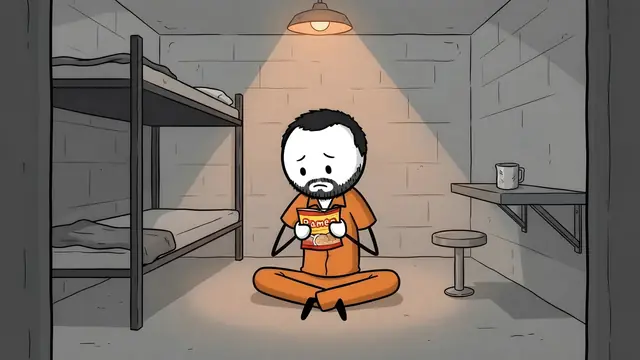

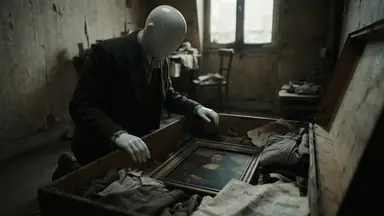




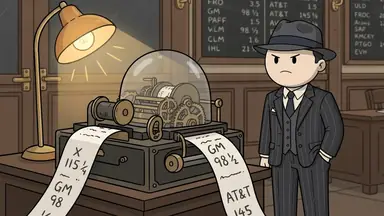
True crime stickman videos tell real cases (heists, prison escapes, detective work, cold cases) with simple stick figures instead of photos or a presenter: a steady narrator walks through the crime, the investigation and the mistake that ended it, scene by scene. To make one, pick a case with a solid paper trail, research it from court records and reputable reporting, write the script like a case file in chapters, draw every scene in one noir stick figure look, and add a narrator and captions. ClipFlux does the making in one go: type the case, pick the Ink Noir look, and it writes the script (or uses yours), draws every scene with the same stick figures, voices it and adds captions, as a Short or a full-length 16:9 YouTube video in chapters.
Why this format works
Crime, heist and prison stories told with drawings or animation, with no presenter on camera, already pull millions of views. None of these uses stick figures, which is the point: the audience is there, and the noir stick figure corner of it is young.
| Video | Channel | Look | Views |
|---|---|---|---|
| What The Last 24 Hours of Death Row Prisoner Look Like | The Infographics Show | Flat cartoon | 14M |
| Extreme Vigilante Justice in History | Serious History | Drawn cartoon | 7.5M |
| The Greatest Art Heist In History | Primal Space | 3D | 4.8M |
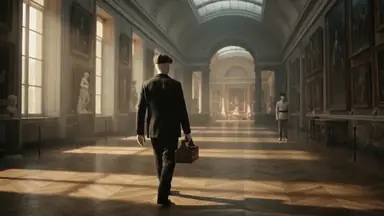
| The Louvre | The Wildest Robbery of the 21st Century | Zoufry | 3D cutaway | 3.4M |
| How To Survive Prison | Mitsi Studio | 3D cartoon | 1.4M |
| The Most Disturbing Unsolved Murders Ever | Simple Paint | Drawn cartoon | 803K |
Search "stickman true crime" on the same day and the stick figure crime videos that come up are mostly from channels a few weeks or months old, many under 100 views. Three things make the stick figure version worth doing well:
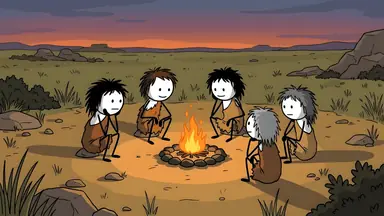
- No face on real people. A round white head stands in for a suspect, a guard or a victim without drawing anyone's real face, which matters when the people are real.
- Tension without gore. Hard shadows, rain and one red object carry the mood, so the story never needs blood to feel serious.
- A look people remember. Black and white with one red detail is easy to spot in a feed, and it stays the same on every video of the channel.
Step 1: Pick a case with a paper trail
Start with cases that are well documented and settled: famous heists, prison escapes, cons, old cold cases that were finally solved. They have court records, books and years of reporting to check against, and the people involved are long in the public record. Search YouTube for the case first; if it already has a dozen recent videos, tell it from a narrower angle (the one clue, the one mistake, the guard who noticed). Cases to start from:
- How a half-eaten sandwich helped crack the 2003 Antwerp diamond heist
- How the Great Train Robbery gang was caught by a Monopoly board
- How three men escaped Alcatraz in 1962 and were never found
- Who stole the paintings from the Isabella Stewart Gardner Museum?
- How the Hatton Garden burglars were caught
- What a day inside Eastern State Penitentiary was like in 1830
- How family-tree DNA started solving cold cases
- Where did D.B. Cooper go after he jumped?
Step 2: Research it from court records and reporting
Read the court records where they are public, the major newspapers that covered the trial, and books by reporters who worked the case. Note what was proven, what was alleged and what is still a theory, and say which is which in the script ("police believed", "he was never charged"). AI writes confident crime stories that sometimes swap names, dates and verdicts; whatever writes your script, check every name, date and number against your sources.
Step 3: Write the script like a case file
For a long video, eight to fifteen minutes in five to eight chapters that read like sections of a file: the night it happened, the plan, the investigation, the mistake, the trial, what happened after. Open on the strangest true detail in the first twenty seconds ("the evidence that sank them was a sandwich"), then go back to the start. For a Short, one case, one clue and one twist. Tell it in the third person, keep sentences short, and end each chapter on an open question. More on structure is in storytelling videos with AI.
Step 4: Draw it in one noir stickman look
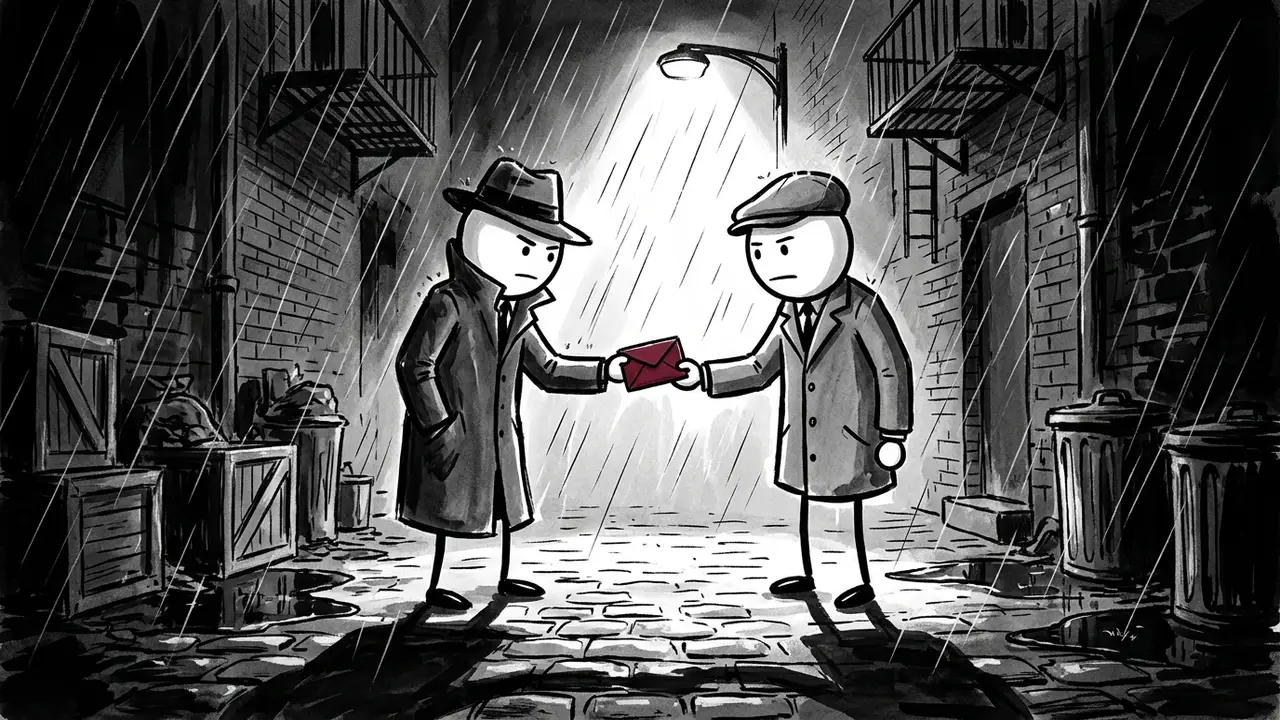
The look is half the format: black-and-white brush ink, hard shadows from one lamp, street light or window, rain, smoke and tight rooms, and one deep red accent on the one object that matters in the scene (the envelope, the key, the getaway car). The trap with AI pictures is that the stick figures turn back into ordinary cartoon people halfway through, or the red spreads onto everything. In ClipFlux's Ink Noir look every person is the same bald white round-head stick figure with dot eyes and a line mouth, the main character exactly like the crowd; who someone is shows in their clothes, hat and what they hold. So give each person one thing to carry in the script: the detective's fedora, the guard's cap, the thief's bag. If a scene comes out wrong, redraw that one scene with a note ("the red is on the briefcase, not the car"). The other stickman looks are on the AI stickman video generator page, and why characters drift between scenes is in keeping AI characters consistent.
Step 5: Add a steady narrator and captions
A low, calm voice that sounds like it is reading the file, never excited about the crime. Keep the same voice on every video so the channel sounds like one person. Add captions; they also help viewers keep names and dates straight.
Step 6: Make the thumbnail
One stick figure in hard shadow, the red object, and two or three words ("ONE MISTAKE", "NEVER FOUND"). The title names the case or asks the question; the thumbnail hints at the twist. ClipFlux draws the thumbnail from the video's own characters and look (see the thumbnail maker guide).
Step 7: Turn it into a series
Number the cases ("Case 001") and plan ten before you post the first one: a heist, an escape, a con, a cold case, then repeat. Post on a steady schedule. A ClipFlux Channel can work through your list and post on the days and at the hour you choose (see YouTube automation with ClipFlux).
Real cases, real people
True crime is about people who were really hurt, and their families can find your video. Stick to what court records and reputable reporting say, call a suspect a suspect until a court says otherwise, and leave out private people who are not part of the public record. Show the moment before or after, an empty chair, a red object; never the violence itself. Ink Noir is drawn to be tense but never gory.
YouTube's rules point the same way. Its violent or graphic content policy removes violence or gore meant to shock or disgust, and makes exceptions for educational or documentary videos only when that context is in the pictures or audio of the video itself, not just the title or description. Its harassment policy bans mocking the death or serious injury of an identifiable person, denying or minimizing someone's role as a victim of a well-documented major violent event, and sharing private personal information. More true crime niche advice is in AI documentary videos.
How people make these by hand
The free tutorials teach a four-tool stack: ChatGPT for the script and the picture prompts, an image model for the scenes, ElevenLabs for the voice, and CapCut to cut it together. It works and costs little, but a ten-minute video needs a hundred or more pictures, and keeping them all black and white, with the same stick figures and the red in only one place, is where most of the hours go. The whole manual workflow is in How to make AI videos with ChatGPT by hand.
Don't copy the videos
The big cases get told again and again, and a retelling that follows someone else's script gives viewers nothing new. Copies also do badly with YouTube: since July 16, 2026 its monetization rules name videos that look made from a template or feel interchangeable as inauthentic content. Borrow the format, the noir look and the case-file tone; bring your own cases, your own research and your own angle. What YouTube pays for is in Can AI videos be monetized on YouTube? and more channel ideas are in the faceless channel ideas guide.
Questions
What AI is used to make true crime stickman videos?
Most channels do not say. Free tutorials teach ChatGPT for the script, an image model for the scenes, ElevenLabs for the voice and CapCut for the edit. ClipFlux does all of it in one tool with its Ink Noir look, keeping the same stick figures in every scene.
Can AI make true crime videos about real cases?
Yes, but AI can swap names, dates and verdicts, so check every line against court records and reputable reporting. Say what was proven and what was only alleged.
Does YouTube allow true crime videos made with AI?
Yes, within its rules: no violence or gore meant to shock, educational context shown in the video itself, and no mocking of real victims. Since July 16, 2026 template-made, interchangeable videos count as inauthentic content and are not paid.
Can I make true crime stickman Shorts?
Yes. The Ink Noir look works for Shorts and for full-length 16:9 videos in chapters. A Short works best as one case, one clue and one twist.
Why use stick figures for true crime?
A plain white round head stands in for real people without drawing their faces, hard shadows and one red object carry the tension without gore, and the look stays the same on every video.