





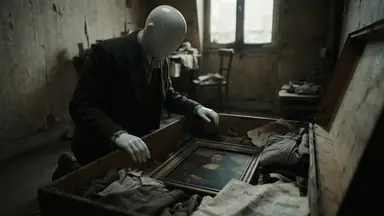


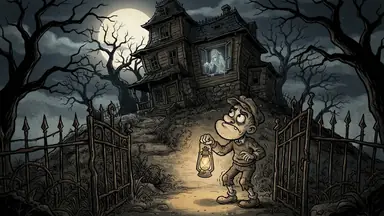

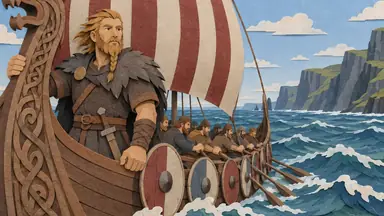




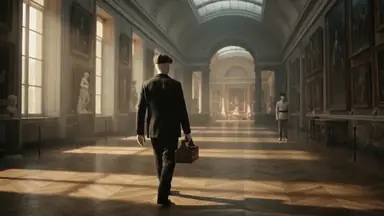
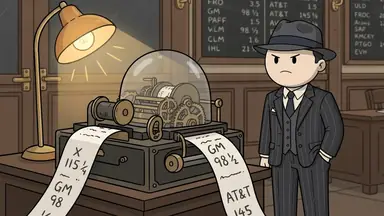
Epic history stickman videos tell big true stories (wars, empires, explorers, disasters, "what if" history) with simple stick figures placed inside painted, dramatic worlds: a lone figure on a cliff above a jungle, a tiny army under a stormy sky. To make one, pick a big story with one clear question, check the facts, write a script in chapters, draw every scene in one look that shows scale, and add a narrator and captions. ClipFlux makes the whole video from the topic: pick the Cinematic look and it writes the script, draws every scene with the same stick figures, voices it and adds captions, as a YouTube Short or a full-length 16:9 video in chapters.

This guide is about the big stories. For everyday prehistoric life, see How to make "What did ancient humans do all day" videos; for the countdown of bad eras, see How to make "worst time in history to be born" videos.
Why this format works
The biggest channels in this space are drawn by hand with simple round-headed or stick figures, and long history videos in that style pull millions of views. Historically had 1.61 million subscribers; Serious History had 860,000; StickTory had 147,000. Their top history videos:
| Video | Channel | Views |
|---|---|---|
| The ENTIRE History of ROME [No AI] | Historically | 10M |
| The ENTIRE History of CHINA [No AI] | Historically | 7.8M |
| The Greatest Last Stands in History | Serious History | 3.2M |
| Most Epic Origin Stories in History | Serious History | 1.8M |
| Napoleon's Epic Final Battle | Serious History | 1.3M |
| Your Life as Julius Caesar | StickTory | 552K |
The format's best-known ancestor is OverSimplified (9.67 million subscribers), whose simple cartoon "The Napoleonic Wars, Part 1" had 68 million views. Three things carry all of them:
- Scale against simplicity. A whole empire, an army or an ocean crossing, shown with figures anyone can read in a split second. The contrast is the look.
- A story, not a list of dates. Who wanted what, what went wrong, what it cost. Historically's Rome video runs 38 minutes in eight chapters and still has 10 million views.
- Dark history you can actually watch. Stick figures keep wars, plagues and shipwrecks from becoming too much, without hiding what happened.
Step 1: Pick a big story with one clear question
Good topics have scale and a turn: an empire at its peak and the day it cracked, an expedition that went wrong, a battle decided by one choice. Frame it as a question or a promise: "How did...", "Why did...", "What if...", "The entire history of...". Search YouTube first; if the exact title is already a hit, go narrower (one battle, one ruler, one expedition). "What if" history works too, as long as you say clearly which part really happened (more in How to make "What if" videos). Fresh ones to start from:
- How did Pizarro and a small band of soldiers topple the Inca Empire?
- What if Napoleon had won at Waterloo?
- The race to the South Pole: why Amundsen came home and Scott did not
- How did the Mongols build the largest connected land empire in history?
- What happened to the lost Franklin expedition?
- How Hannibal crossed the Alps with an army and elephants
- What if the Library of Alexandria had never burned?
- The Great Fire of London: how one bakery burned down a city
- How the eruption of Krakatoa in 1883 was heard thousands of kilometres away
- What if Rome had never fallen?
Step 2: Check every fact
History viewers spot mistakes and say so in the comments. AI writes confident history that is sometimes wrong: it invents dates, army sizes, death tolls and quotes nobody said. Check every number and name against a good source, and say "historians think" where the evidence is thin (ancient army sizes are a classic: old writers often gave numbers modern historians doubt). When ClipFlux writes a long video about a real subject, it writes it from that subject's Wikipedia article, which keeps it close to the record, but read it through before you post. More on getting facts right is in Can AI make documentary videos?
Step 3: Write the script in chapters
Long videos run ten to forty minutes in clear chapters: the world before, the rise, the turning point, the fall, what it left behind. Open with the most dramatic moment or the question in the first twenty seconds, then go back and build up to it. Name a few people and follow them, so the empire has faces. A Short is one moment told fast: one battle, one decision, one disaster, in under a minute. You can write your own script and paste it in, or let ClipFlux write it from your topic and edit it.
Step 4: Draw it big, in one look
The look is the format: flat stick figures inside a painted world with depth, haze and dramatic light (golden-hour sun, firelight, cold moonlight, storm clouds), and wide shots where the figures are small against armies, cities, ships and mountains. The trap with AI pictures is that the main character keeps changing, or the crowd comes back as ordinary cartoon people, and the video stops looking like one world. In ClipFlux's Cinematic look every person in every scene is the same bald white round-head stick figure with dot eyes and a line mouth, the main character exactly like the crowd. Who someone is shows in their clothes, helmet or hat and what they hold: a crown, a spear, a compass. If a scene comes out wrong, redraw it with a note. Why characters drift and how to stop it is in Keeping AI characters consistent across scenes, and the other stickman looks are on the AI stickman video generator page.
Step 5: Keep the battles watchable
Wars are the heart of this niche, and they work without gore. Show the size of an army, the lines meeting, smoke, a fallen banner, the field afterwards. Let the narrator say what it cost. Stick figures already soften the picture; keep it that way, both for viewers and because YouTube limits ads on graphic violence.
Step 6: Add the narrator, captions and thumbnail
A steady, serious voice with a little dry humour suits epic history. Keep one voice for the whole channel and add captions, since names and places are easier to follow written down. For the thumbnail, use one stick figure in a big moment (on a cliff, before an army, on a sinking ship) and two or three words in big letters. ClipFlux draws the thumbnail from the video's own characters and look (see YouTube thumbnail maker).
Step 7: Turn it into a series
History channels grow on runs: every empire, every great explorer, every battle that changed a war. Plan ten topics before you post the first one and post on a steady schedule. A ClipFlux Channel can work through your list and post on the days and at the hour you choose (see YouTube automation with ClipFlux). For making the long version work, see Long-form faceless YouTube videos with AI.
How people make these by hand
The big channels draw by hand: Historically puts "[No AI]" in its titles, and The Paint Explainer says in its channel description that all its drawings are made by a human artist. The AI route most tutorials teach uses ChatGPT for the script and Google Flow to draw and animate the scenes, then a voice tool and an editor; the most watched one had 433,000 views two weeks after it went up, read on 28 October 2026. It works, but a twenty-minute history video needs well over a hundred pictures, and keeping the same figures and the same painted world across all of them is where the hours go. The whole manual workflow is in How to make AI videos with ChatGPT by hand.
Don't copy the videos
On 28 October 2026, a YouTube search for Roman Empire stickman history showed Historically's Rome video at 10 million views next to twelve recent uploads from small stickman history channels, all posted in the last five months, all with titles like "The Rise and Fall of Rome". None had 500 views. The same topic, told the same way, a few months later, is a video viewers have already seen. And since July 16, 2026, YouTube's monetization rules name videos that look made from a template or feel interchangeable as inauthentic content. Borrow the format and the look; bring your own story, your own angle and checked facts. What YouTube pays for is in Can AI videos be monetized on YouTube?
Questions
What AI is used to make history stickman videos?
The biggest channels in this style draw by hand. AI tutorials teach ChatGPT for the script and Google Flow for the pictures, plus a voice tool and an editor. ClipFlux does all of it in one tool with its Cinematic look, keeping the same stick figures in every scene.
How long are epic history stickman videos?
Long ones run about ten to forty minutes in chapters; Historically's entire history of Rome is 38 minutes. Shorts tell one battle or one decision in under a minute.
Can AI get history facts wrong?
Yes. AI can invent dates, army sizes, death tolls and quotes. Check every number and name against a good source before you post, whatever wrote the script.
Can I show battles and wars in these videos?
Yes, keep them non-graphic: show the size of the armies, the lines meeting and the aftermath, and let the narration carry the cost. YouTube limits ads on graphic violence.
Which ClipFlux look is best for war and empire videos?
Cinematic: flat stick figures with plain white round heads inside richly painted, dramatically lit worlds. It works for Shorts and full-length 16:9 videos, but not for the Talking character format or kids stories.