











To copy a faceless YouTube channel without ending up with 50 views, copy its format and point it at topics it has not covered. The format is five things: the kind of topic, the title pattern, the length, the first 15 seconds, and the look and voice. Never take its titles, scripts or thumbnails. ClipFlux can do the breakdown for you: paste a channel and it reads the latest videos and how the best one is built, then plans your own channel in that format with titles of your own. Below is the method, by hand or with ClipFlux.
Why most copied channels get 50 views
When we searched YouTube in October 2026, AI channels that reused a big video's exact title got 17 to 200 views, in every niche we checked. Generic questions fared no better: titles like "why do we..." or "how did people... before..." each had 6 to 14 AI copies from the months before, at 1 to 400 views.
The reason is simple. The people who wanted that video already watched the original, and YouTube already has a video it trusts for that search. A copy asks for the same viewers and loses. What broke out in the same searches was the opposite: small channels that took a format already proven somewhere else to a topic or a community that did not have it yet. Keep the audience in mind as the niche, and treat the format as packaging you can borrow.
Step 1: Find a channel worth copying
Most people copy the biggest channel in a niche. A better target is a small one that is outgrowing itself. Three checks:
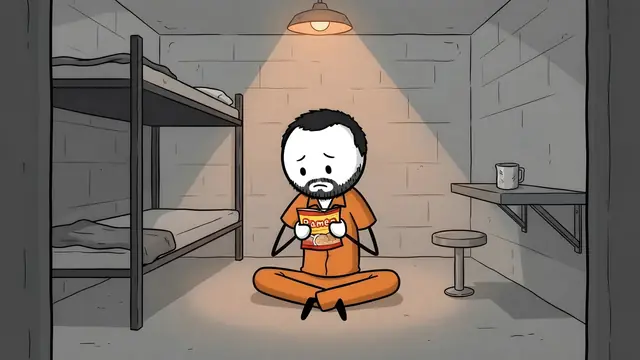
- Views far beyond subscribers. A channel with a few thousand subscribers and a video at hundreds of thousands of views has a format that reaches people who never heard of it. In our October searches, a prison channel with about 5,500 subscribers had a video near 380,000 views: every unwritten prison rule, explained one by one. A channel whose views only match its subscriber count lives off an audience you do not have.
- Recent uploads still hitting. Compare its videos from the last month with the ones from two to four months ago. If the newer ones get far fewer views, the format is fading and you would arrive late.
- Something you can make without a face. Narration over drawn or animated pictures works. A format that rests on a host, gameplay, reactions or real footage does not carry over as it is. The prison channel above used real photos and footage, but its format, a list of hidden rules explained in turn, works just as well over drawn scenes.
To find candidates, search a topic on YouTube, filter to videos uploaded this month and order them by views. The small channel names that keep turning up near the top are the ones to open.
Step 2: Break down why it works
Open the channel's best video: not its most viewed overall, but the one furthest above the channel's usual views. Write down its format in one line per part.
| Part | What to write down | For example |
|---|---|---|
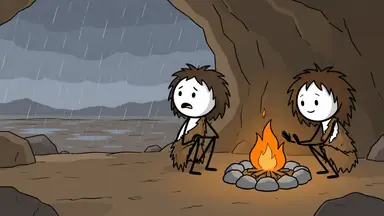
| Topic lane | The kind of topic every video takes, narrower than the niche | Daily life in one role in history, not "history" |
| Title pattern | The shape the titles share, with blanks for the topic | "Why It Sucks to Be a [role] (in [era])" |
| Length | How long the videos run, and whether they are split into chapters | About 12 minutes, five chapters |
| First 15 seconds | What the opening shows and says before the viewer decides to stay | The worst moment of the day first, then the question |
| Look and voice | The drawing style, who tells it (a narrator, "you" or a diary) and the tone | Cartoon stick figures, told to "you", dry and calm |
If you cannot say why the best video beat the others, open the next best and compare. The parts they share are the format; the rest is that one video.
In ClipFlux this step takes about half a minute. Paste the channel link or @handle where it says "Start from a channel", on the home page or on the Channels page. ClipFlux reads the channel's latest uploads (up to 15) and their views, marks its strongest recent long video and how far above the usual views it got, and reads that video's captions for how it opens, how it is built and how it ends. It then shows the niche, why the channel works, the format (length, chapters and who tells it) and the title pattern, with the closest ClipFlux look and narrator matched to it. Reading a channel costs no credits.
Step 3: Find your own angle
There are two ways to point a proven format somewhere new:
- Topics the channel has not covered. Go through its uploads and list what is missing from its own lane: the roles, places, eras or rules it has not touched.
- The same format in another community. In October the "every [thing], explained" format had moved into football: a channel with about 3,600 subscribers had a video at 932,000 views explaining every way one club cheated, and one with 408 subscribers had 186,000 on every banned football kit. A community that loves a subject but has not had the format yet is the easiest room to find.
Then check each idea on YouTube before you make it. Search the topic and look at two things. An old video on it with big views proves people want it. Few recent uploads on it means there is room. In October an old video about women fainting in the 1800s had about 3 million views and we found no recent copies; the generic questions above had a dozen fresh ones each. Drop any idea where the recent copies are many and small.
If you are choosing the niche as well, check what it pays first: ad rates differ several times over between niches, see YouTube RPM by niche. For lanes that already work without a face, see faceless YouTube channel ideas.
Step 4: Make your channel in that format
By hand, write every script from your own research in the format you wrote down, then draw, voice and edit it. The format tells you the shape; the substance has to be yours.
In ClipFlux, press "Make my channel like this" after the read. The channel creator walks three steps in that format, each yours to change:
- First video: four title ideas written for your channel, never one of the copied channel's own titles, or a title you type. The length starts at the one closest to their best video.
- Look: the matched look comes first, marked "Like the channel".
- Narrator: the closest of the ClipFlux narrator voices, never a copy of theirs.
The price shows before you make the first video. Your channel keeps the format: who tells the story, and the notes on how the best video was built, so later videos follow it too. Those notes describe the structure only; they are checked so they never quote the captions they came from, and the captions are not kept. From there the channel can make and post a video on the days you pick, as described on YouTube automation with ClipFlux.
Step 5: Title and thumbnail: the pattern, not the words
Fill their title pattern with your own topic. If their titles run "Why It Sucks to Be a [role] (in [era])", fill the blanks with a role and an era they have not done, never one of their titles reworded. For the thumbnail, note what theirs have in common and make your own in that kind of layout. In the winners we looked at it was one big, exaggerated face and one to three words. ClipFlux draws thumbnails from your video's own characters and look (see the thumbnail maker).
What not to copy
- Titles. A reused title is less a legal problem than a views problem: these are the 17-to-200-view videos.
- Scripts. A reworded script is still someone else's script. YouTube does not monetize reused content, meaning other people's material without significant changes of your own, and a copied script can also be taken down for copyright.
- Thumbnails, clips and pictures. These are someone else's work. A copyright takedown gives your channel a strike, and three strikes can end it.
- Their voice. Never clone a creator's voice. YouTube lets people ask for AI content that simulates their face or voice to be removed. Pick your own narrator.
- Their face, character or channel identity. A recurring character or mascot belongs to its creator, and a channel that copies another's name, picture or overall look to pass as it falls under YouTube's impersonation policy.
Even with nothing copied, a channel of near-identical videos can lose monetization: YouTube calls template-made, interchangeable videos inauthentic content and reviews the channel as a whole. The rules are in can AI videos be monetized on YouTube? The short version of what ClipFlux takes from a channel and what it leaves is in can AI copy the style of a YouTube channel you like?
Related guides
- How to start a faceless YouTube channel, the whole path from niche to monetized.
- Faceless YouTube channel ideas, niches that work without a face.
- YouTube RPM by niche, what each niche pays per 1,000 views.
- YouTube automation with ClipFlux, a channel that makes and posts its own videos.
Questions
Why do copied YouTube videos get so few views?
Because the original already has those viewers. When we searched YouTube in October 2026, AI channels that reused a big video’s exact title got 17 to 200 views in every niche we checked. The same format on a topic nobody had covered yet is what broke out.
Can you get demonetized for copying a YouTube channel?
For copying its material, yes. YouTube does not monetize reused content, meaning other people’s videos, scripts or footage without significant changes of your own, and copying a thumbnail or a script can bring copyright strikes. Taking a format, a length or a kind of topic is not reused content, as long as every video is made new.
How do you find a faceless channel worth copying?
Look for views far beyond subscribers: a small channel with a video at many times its usual views has a format that travels. Check that its newest uploads still do well, and that the videos are narrated over pictures rather than built on a host, gameplay or real footage.
Can AI copy a YouTube channel for me?
ClipFlux can copy the format. Paste a channel link or @handle: it reads the latest uploads and the captions of the best one, shows why it works, and plans your channel with a matched look and narrator. Reading costs no credits, and the title ideas are never the channel’s own.