
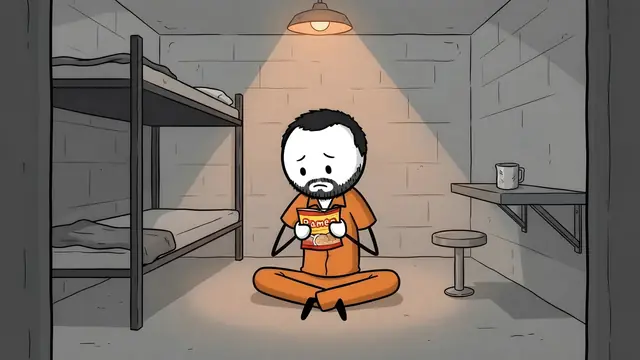
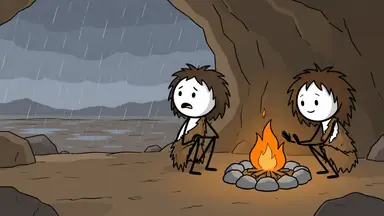



Scary stickman stories are short horror tales told by a narrator over drawn scenes of stick figures: a night shift, an empty house, a rule you must not break, slowly going wrong. To make one, pick a creepy story (and be honest about whether it is fiction), write a script that builds slowly, draw every scene in one dark stickman style with the same characters, and add a calm narrator and captions. ClipFlux does the making in one go: type the story idea or paste your own script, pick the Creepy Comic look, and it writes the script, draws every scene with the same stick figures, voices it and adds captions, as a Short or a full-length 16:9 YouTube video in chapters.
Why this format works
Animated scary stories are one of the oldest faceless formats on YouTube: a voice tells the story and simple drawings carry it, so nobody has to appear on camera. Stick figures suit it better than you might expect:
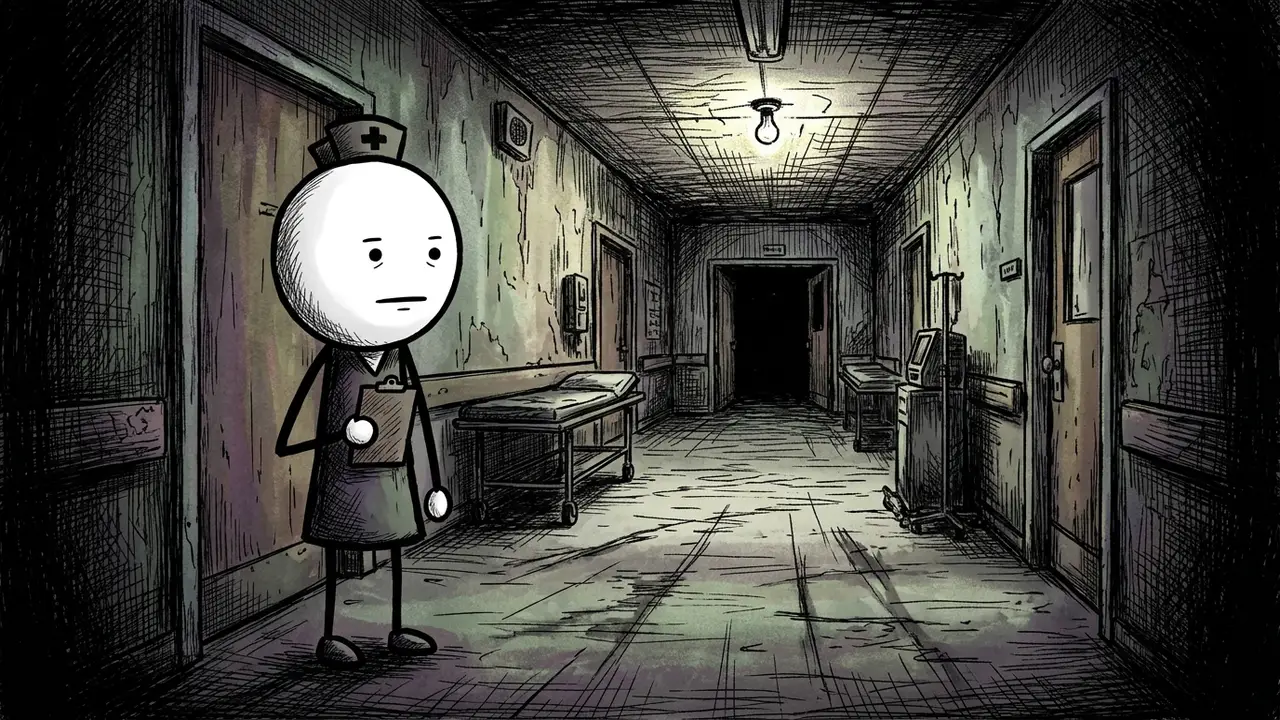
- The viewer fills in the face. A blank white head with two dot eyes can be anyone, so the listener puts themselves in the corridor. A plain face that does not react is often creepier than a screaming one.
- The fear comes from the space, not from gore. A long hallway, a figure half in shadow, a door left open. That keeps the story watchable for a wide audience.
- Stories never run out. Night shifts, rules lists, urban legends, unsolved disappearances and dark history all fit the same look, so one channel can post for years without changing style.
Step 1: Pick the kind of scary story
Most videos in this niche are one of five kinds: original creepypasta-style fiction (rules lists, night shifts, things in the woods), urban legends retold, unsolved mysteries, dark history, and listener "true" stories. Decide which one you are making before you write a word, because it changes what you can say. An invented story is fine, but do not call it a true story. If it is real, check every name, date and place, and say where the facts end and the guessing starts. Fresh ideas to start from:
- A night nurse keeps getting calls from room 14, which has been empty for years
- A man rents a cheap flat and finds a list of rules taped inside the fridge
- A lighthouse keeper counts one more ship light than there should be
- A girl finds a door in her old family house that was not there yesterday
- A night bus driver picks up the same silent passenger at the last stop every night
- A security guard sees himself on a camera in a room he never entered
- The urban legend of the hitchhiker who vanishes from the back seat
- A village where nobody is allowed outside after the church bell rings twice
Step 2: Write a script that builds slowly
Open on the one detail that is wrong ("the call button in room 14 lit up again"), not on a long introduction. Then add small wrong things one at a time, each a little worse than the last, and hold the reveal back until the end. Keep sentences short and concrete: what the character sees, hears and decides. A Short tells one moment with one twist; a long video can follow a whole night or a whole case in chapters, each ending on a question. The bigger shape of this is in How to make storytelling videos with AI.
Step 3: Draw it in one creepy stickman look
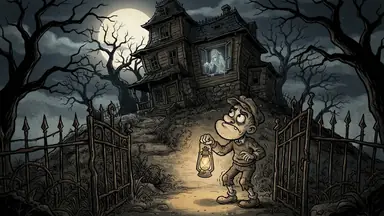
The look is what tells a viewer in one frame that this is a scary story: rough, scratchy ink with cross-hatching in the shadows, murky greens, bruised purples and cold greys, and a single weak light (a flickering bulb, a candle, a torch beam) with the edges falling into darkness. The trap with AI pictures is that the hero stays a stick figure while the nurse or the stranger comes back as a realistic person, and the world stops looking like one place. In ClipFlux's Creepy Comic look everyone, the main character included, has the same bald white round head with dot eyes and a line mouth; who someone is shows in their clothes, hat and what they hold. It is unsettling but never gory: no blood, no wounds. If a scene comes out wrong, redraw it with a note ("make the corridor longer and darker"). More on keeping the same characters across scenes is in How to keep a character consistent across AI video scenes, and the other stickman looks are on the AI stickman video generator page.
Step 4: Add a calm narrator and captions
Horror narration works low and steady, a little slower than normal speech, with pauses before the bad part. Do not make the voice spooky; let the words do it. Keep one narrator for the whole channel so viewers know it is you. Add captions: many people watch on phones with the sound low, and a line of text on screen at the scary moment hits harder.
Step 5: Choose Shorts, long videos or both
Scary stories work in both shapes. A Short is one setup and one twist, told fast, and works as a trailer for the full story. A long 16:9 video lets a story breathe: the slow build, the second visit to the basement, the ending. ClipFlux makes Creepy Comic videos as Shorts and as full-length YouTube videos in chapters. The look is not offered for the Talking character format, where one character speaks to camera. For the Shorts side, see How to make faceless YouTube Shorts with AI.
Step 6: Post it as a series
Horror channels grow on habit: viewers come back for the next story at the same time. Write down ten stories before you post the first one, group them (night shift stories, rules stories, unsolved cases) and post on a steady schedule. A ClipFlux Channel can work through your list and post on the days and at the hour you choose (see YouTube automation with ClipFlux). When you upload, YouTube asks whether each video is made for kids. Scary stories are usually made for teens and adults, so answer that question honestly for each video.
How people make these by hand
Hand-animated horror channels draw and animate every scene in animation software, which looks great and is slow. The faster DIY route is a stack of AI tools: a chat AI such as ChatGPT for the script and the picture prompts, an image model for the scenes, a voice tool such as ElevenLabs for the narrator, and an editor such as CapCut to cut it together. It works, but a ten-minute story needs a hundred or more pictures, and keeping the same dim, inked look and the same stick figure in all of them is where most of the hours go. The whole manual workflow is in How to make AI videos with ChatGPT by hand, and the tools compared are in the best software for stick figure videos.
Don't copy the stories
Famous creepypastas and other channels' stories belong to their writers. Retelling someone's story word for word, or remaking another channel's video scene by scene, can get a video taken down, and viewers have usually heard it already. Old folk legends are fair to retell in your own words; for anything else, write your own. Copies also do badly with YouTube's monetization rules, which do not pay for videos that feel mass-produced or interchangeable. Borrow the format, the look and the pacing; bring your own stories. What YouTube pays for is in Can AI videos be monetized on YouTube?
Questions
What AI makes scary stickman story videos?
Most channels do not say. The DIY route is ChatGPT for the script, an image model for the scenes, ElevenLabs for the voice and CapCut for the edit. ClipFlux does all of it in one tool with its Creepy Comic look, keeping the same stick figures in every scene.
Can I say my scary story is a true story?
Only if it is. Invented stories are fine as fiction, but labelling them true misleads viewers. For real cases, check every name, date and place, and say where the facts end.
Are scary stickman videos made for kids?
Usually not. YouTube asks whether each video is made for kids, and horror stories are normally made for teens and adults. Answer that question honestly for every upload.
Is the Creepy Comic look gory?
No. It is unsettling but never gory: dim light, long corridors and figures half in shadow, with no blood or wounds. The fear comes from the light and the space.
Can I make scary stickman stories as YouTube Shorts?
Yes. ClipFlux makes Creepy Comic videos as Shorts and as full-length 16:9 YouTube videos in chapters. A Short works best as one setup and one twist.