
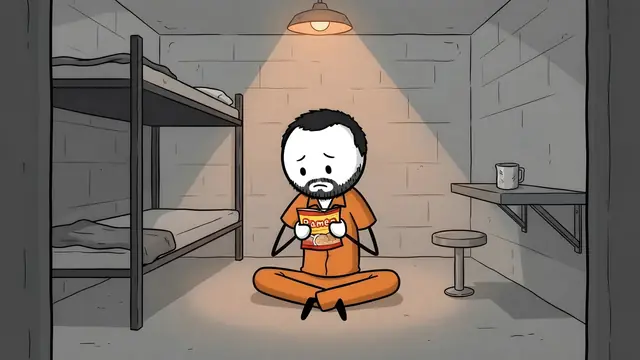




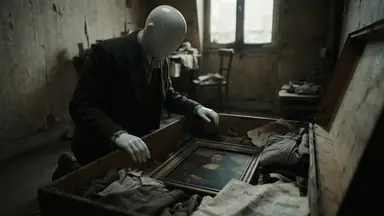


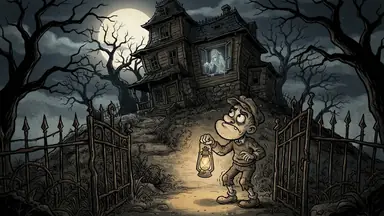

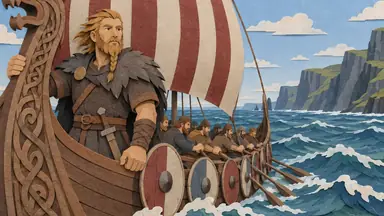



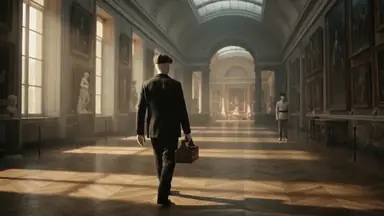
This 3:30 video was made with ClipFlux from one paragraph about the 1911 theft of the Mona Lisa. ClipFlux told it as a true crime story with a cold open and nine chapters, from the night in the closet to the twist at the end, narrated it, and drew all 40 scenes in its Mannequin 3D look, whose faceless figures avoid drawing real people wrong. It is shown here unedited, including several lines that get dates and details wrong, which are pointed out below.
3:30, the whole video, unedited. Made with ClipFlux in the Mannequin 3D look.
How it was made
| This video | |
|---|---|
| Started from | A written brief (below) |
| Look | Mannequin 3D |
| Pacing | One picture per narration line |
| Length | 3:30 |
| Chapters | 9, after a cold open |
| Scenes | 40 |
| Edited by hand | No |
The full brief, as typed
The man who stole the Mona Lisa. In August 1911 an Italian handyman named Vincenzo Peruggia walked out of the Louvre with the most famous painting in the world under his coat, and nobody noticed for a day. Tell it as a true crime story in Fern's style: how he hid in a closet overnight, why the empty wall drew more visitors than the painting ever had, why Picasso was questioned, how Peruggia kept it in a trunk in his Paris flat for two years, and how he was caught trying to sell it to a gallery in Florence. End on the twist: the theft is the reason the Mona Lisa is famous today.
What it gets wrong
- It sets the theft on the morning after 21 August 1911. The painting was taken on the morning of Monday 21 August, when the museum was closed to visitors, and the loss was noticed the next day.
- It says a restorer found the bare wall. It was the painter Louis Béroud, who had come to paint in the gallery on 22 August and saw the Mona Lisa was gone.
- It says Picasso had bought stolen sculptures from the Louvre two years earlier. He got the two stolen Iberian stone heads in 1907, four years before the theft.
- It has officers waiting at the gallery when Peruggia arrives. He showed the painting to the dealer Alfredo Geri and the Uffizi director Giovanni Poggi in his hotel room; they took it to the Uffizi to check it, and police arrested him at his hotel.
- It says he was released after two years. He was sentenced in 1914 to one year and 15 days, cut on appeal to about seven months.
- It says he returned to Italy and died there in 1925. He was already in Italy; he later moved back to France and died near Paris on 8 October 1925.
- It says the painting came home to the Louvre on 30 December 1913. It was first shown in Florence, Rome and Milan, and went back on show at the Louvre on 4 January 1914.
- None of these sounds wrong when narrated, which is the point: read an AI script before you post it. In ClipFlux any line can be sent back with a note and only that scene is made again.
Full transcript
0:00 Cold open
In 1911, a handyman walked out of the world's most famous museum with its most famous painting. Nobody noticed for twenty-four hours.
0:08 The perfect crime
August twenty-first, nineteen eleven. The Louvre closes at five. Vincenzo Peruggia was a handyman. He knew the Louvre's corridors. He found a closet. He stepped inside. He waited for darkness. By morning, the museum was empty. Peruggia walked to the Salon Carré. The Mona Lisa hung on the wall. It was not famous yet. He lifted it from the wall. He removed the frame. He walked out. No alarm. No guard. No one saw him leave the Louvre that morning. He disappeared into Paris. The empty wall would not be noticed until tomorrow.
0:36 The empty wall
Tuesday morning, August 22nd. A restorer arrived to clean the painting and found only bare wall. The director was summoned. He stared at the wall in disbelief. The most famous painting in the world had vanished. By afternoon, word had spread. By evening, crowds lined the streets outside the Louvre. They came to see nothing. Newspapers across Europe screamed the story. The painting that few had noticed became the most famous work on Earth overnight.
1:00 The wrong suspect
The police had a suspect. A young Spanish artist named Pablo Picasso. Two years earlier, Picasso had bought stolen sculptures from the Louvre. Detectives saw a pattern. They brought him in for questioning. Picasso denied everything. He had nothing to do with the Mona Lisa. But the real thief sat in a modest Paris apartment, the painting hidden in a trunk, watching the chaos unfold.
1:21 The trunk
Peruggia's apartment was small, unremarkable, the kind of place no one would ever search. Inside that trunk, wrapped in cloth, was the Mona Lisa. He had stolen it on impulse. For two years he lived with it. He could not sell it. He could not move it. He was trapped. The Louvre remained empty. The world searched everywhere. But the painting was here, in this room, waiting.
1:43 The buyer
By 1913, Peruggia's money had run out. The painting was worthless to him locked away. He wrote to an art dealer in Florence. He said he had something valuable to sell. The dealer was interested. He arranged a meeting in Florence. Peruggia packed the painting carefully. He arrived in Florence believing he would finally be paid. He had no idea the police were waiting.
2:03 The arrest
The dealer never intended to buy. He contacted the police immediately after Peruggia's first letter. Peruggia arrived at the gallery on December twelfth, nineteen thirteen. Officers were already inside, waiting. He did not resist. He did not run. He simply handed over the package and confessed everything. He told them he stole it for Italy. The painting belonged in his homeland, not in a French museum.
2:25 The trial
The confession was clean, but the courtroom was not. Peruggia's claim ignited a firestorm. He was not a criminal mastermind. He was a patriot, his lawyers argued. Italy's greatest treasure stolen by France. But the prosecution saw only theft. A man who broke into the Louvre, hid for hours, and stole a masterpiece. The verdict came swiftly. Guilty. But public opinion remained fractured, keeping the painting in the world's mind.
2:50 The return
The Mona Lisa came home to the Louvre on December 30th, 1913. Thousands lined up to see it. The theft had made it the most wanted painting on Earth. Peruggia served his sentence quietly. He was released after just two years, his time reduced for good behavior. He returned to Italy and lived in obscurity until his death in 1925, largely forgotten by the world.
3:11 The twist
But the painting Peruggia stole was not the painting the world remembers today. Before the theft, the Mona Lisa hung in the Louvre almost unknown, overshadowed by grander works. The theft changed everything. Newspapers screamed the story across the world for weeks and weeks. Millions who had never heard of it suddenly wanted to see it. The theft made it immortal.
Make a video like this
Type a topic, pick the Mannequin 3D look and a narrator, and ClipFlux writes, draws and narrates it the same way. Start from this video's brief, or read more on the AI history video generator page.
More examples
- Could you survive a lifetime as a medieval peasant? (14:40, Doodle 2D)
- The Wall Street Crash, explained (3:27, Doodle 2D)
- How the pyramids were actually built (4:03, PS2 Graphics)
- What is actually inside a fire hydrant? (2:46, Realistic)
- Ancient humans after dark (2:41, Cartoon Stickman)